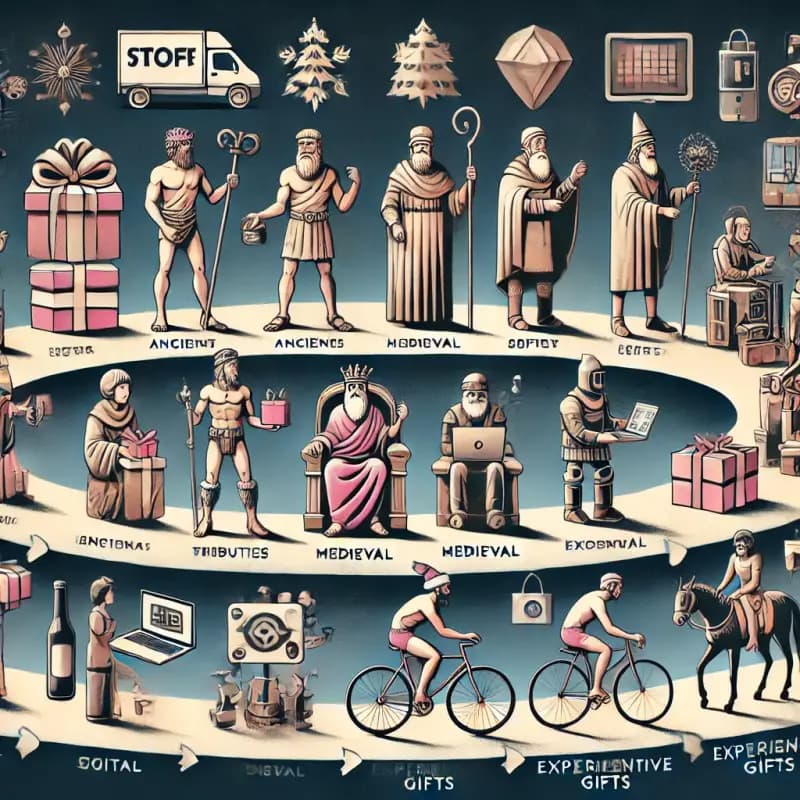
Introduction: The Timeless Tradition of Gift Giving
Gift giving is a practice as ancient as humanity itself, spanning across all cultures, continents, and ages. It's a universal language of love, gratitude, and connection, transcending the boundaries of time and geography. Whether it's a simple gesture or an extravagant display, the act of giving a gift holds profound significance. This article embarks on a journey to trace the historical evolution of gift giving, showcasing how it has adapted, transformed, and thrived through the ages. From offerings to gods in ancient temples to digital e-gifts sent in an instant, this exploration highlights the many forms and facets of gifting. So, let us unravel the captivating tapestry of this timeless tradition.
Gifts as Ancient Tributes: The Earliest Records
Gift giving roots can be traced back to some of the earliest known civilizations, such as those in ancient Egypt and Mesopotamia. In these societies, gifts were often tributes presented to gods, venerating their divine powers, and seeking their favor. Similarly, rulers were showered with offerings, symbolizing allegiance and respect. In Egypt, for instance, lavish gifts accompanied the entombed, believed to aid their journey in the afterlife. Mesopotamians also engaged in gift exchanges, utilizing them as tools for diplomacy and alliance building. These acts of giving were deeply intertwined with the social and religious fabric of the community, highlighting the prominent role of gifts as tokens of reverence, devotion, and socio-political ties in ancient cultures.
The Role of Gift Giving in Social Hierarchies
Gift giving not only signified personal relationships but also played a pivotal role in the dynamics of social hierarchies. In societies like ancient Greece and the Roman Empire, gifts were central to establishing and reinforcing social structures. They were often used to solidify alliances, display power, and demonstrate wealth. Greek leaders exchanged gifts to forge strategic partnerships, a practice mirrored by Roman emperors who bestowed gifts to reward loyalty and curry favor. Such practices underscored gifts as instruments of influence, representing both political clout and socio-economic status. By examining these ancient practices, we see how deeply intertwined gifts have been with authority and hierarchy throughout history.
Cultural Rituals and Gift Giving
Beyond serving political and religious functions, gift giving has always been integral to cultural rituals and celebrations. From marriages to religious ceremonies, gifts symbolize blessings, love, and community unity. In many indigenous and tribal cultures, traditional gifting practices enshrine the values and customs of the community. For instance, in Hindu weddings, the exchanging of gifts is central to the celebration, symbolizing the union of two families. Similarly, in Native American Potlatch ceremonies, gifts are distributed to reinforce social status and honor communal relationships. Such rituals highlight the diverse ways in which gifts have been woven into the cultural fabric of societies worldwide, encapsulating their traditions, beliefs, and social norms.
Medieval Times: Feudal Gifts and Chivalry
During the Middle Ages, gift giving took on a nuanced role among the nobility within the confines of feudal systems. These exchanges were critical for securing loyalty and strengthening ties among the ruling class. Knights often received gifts as tokens of appreciation and allegiance, embodying the era's ideals of chivalry and honor. Lavish gifts could include land grants, finely crafted weapons, or opulent garments. This period also saw the tradition of courtly gifts, where noblemen and women exchanged presents as expressions of courtship and admiration. The exchange of such gifts reinforced feudal bonds and played a significant role in shaping social interactions during medieval times.
Renaissance and Baroque: The Art of Gifting
The Renaissance and Baroque eras heralded a flourish of cultural and artistic expression, significantly influencing how gifts were perceived and presented. Gifts became exquisite works of art, often reflecting the grandeur and sophistication of their givers. Masterpieces crafted by renowned artists were among the most coveted gifts, embodying both aesthetic beauty and social prestige. Royals and aristocrats exchanged extravagant presents, like intricately designed jewelry and custom portraits, to demonstrate wealth and status. These artistic gifts often helped enhance diplomatic relations and served as powerful symbols of a patron’s taste and influence. The period marked a shift where gifting transformed into an elaborate art form, embodying the era’s emphasis on culture and opulence.
Industrial Revolution: Shift in Production and Perception
With the advent of the Industrial Revolution, the landscape of gift giving underwent significant transformation. The proliferation of mass production made gifts more accessible, affordable, and varied, democratizing the practice. Manufactured goods like toys, clothing, and household items became popular gifts, shifting the perception from rare, handcrafted objects to accessible commodities. The revolution also gave rise to commercial gift-giving practices, with the introduction of greeting cards and the expansion of specialized shops. This era marked a shift towards consumer-oriented gifting, where the focus shifted to availability and affordability, enabling more people to participate in the joyous practice of exchange, regardless of their socio-economic standing.
20th Century: Consumerism and Gift Culture
The 20th century witnessed the evolution of consumer culture, profoundly influencing gift-giving practices. The rise of advertising and marketing, coupled with economic growth, led to the commercialization of traditional holidays. Christmas, Valentine's Day, and Mother's Day became major occasions for retail-driven gift exchanges. This era also saw the emergence of specialized gifts tailored for diverse demographics and interests. As gift registries and wish lists appeared, gifting became more personalized, catering to individual preferences. This period marked the transformation of gift giving into a culturally embedded tradition, driven by consumerism, and characterized by an ever-expanding array of choices and expectations.
Gifts in the Digital Age: Virtual Presents and E-Gifting
In the digital age, the way we give and receive gifts has once again transformed, becoming faster and more technologically driven. Virtual gifts have emerged, including subscriptions, e-cards, and online gift vouchers. These allow for instantaneous gifting, transcending geographical limits and time constraints. Digital platforms offer the convenience of personalized e-gifts, such as curated playlists or streaming service subscriptions. This modern evolution caters to our increasingly digital lifestyle, allowing for immediate delivery and tailored experiences. The digital age has redefined the boundaries of gift giving, offering innovative, efficient, and diverse ways to express our love and appreciation in a fast-paced world.
Psychology of Giving: Why Do We Give?
The motivations behind gift giving are as diverse and complex as the practice itself. At its core, gifting is motivated by feelings of altruism, love, and appreciation. Gifts allow us to express emotions that words alone might fail to convey, strengthening bonds and deepening connections. However, not all gifting is altruistic; social norms and expectations often drive our choices, imposing an obligation to gift on certain occasions. The psychology behind giving reveals it as both an emotional and socially driven act. Whether driven by genuine intent or social expectations, gifts remain a powerful means of expressing our emotions, fostering human connection, and enhancing relationships.
Gift Giving Across Cultures: Similarities and Differences
Exploring the global tapestry of gift giving reveals a wealth of cultural traditions and customs. While the motivations behind gifts may be universal, the expressions are beautifully varied. In Japan, the practice of Omiyage revolves around giving local specialties as a token of respect and gratitude. In India, gifts are often given in pairs, avoiding odd numbers considered inauspicious. Whether it’s red envelopes during the Chinese New Year or the kola nut exchanges in Nigeria, understanding these cultural nuances enriches our appreciation for this universal act. Recognizing these differences not only helps avoid faux pas but also fosters cultural respect and cross-cultural connections.
The Environmental Impact of Modern Gift Giving
Modern gift giving, while joyous, also carries environmental implications, primarily due to packaging waste and the carbon footprint associated with production and delivery. The plethora of wrapping paper, plastic, and non-recyclable materials has raised ecological concerns. In response, there is a growing trend towards sustainable gifting practices. Ideas like zero-waste gifts, reusable packaging, and eco-friendly products are gaining traction. Opting for experiences over physical items, such as donating to charities in someone's name, also contribute to sustainable choices. As awareness of environmental issues increases, practices align with a more environmentally conscious approach, ensuring that the joy of giving extends to preserving our planet.
Economics of Gift Giving: Budgets and Expectations
Gift giving involves navigating the intricate balance between generosity and financial prudence. Many grapple with pressures born of societal expectations and personal aspirations, leading to potential overspending during holidays and special occasions. Setting pragmatic budgets and managing expectations are critical for maintaining financial health while partaking in the joys of giving. Tips like creating a gifting calendar, pooling resources for group gifts, or opting for heartfelt, handmade presents help manage costs. With thoughtful planning, gift giving can remain a fulfilling gesture of kindness and appreciation, rather than a source of stress or financial strain.
The Future of Gift Giving: Trends and Innovations
As technology continues to advance, the future of gift giving promises exciting transformations and innovations. Emerging trends include personalized and experience-based gifts, focusing on creating lasting memories rather than material possessions. Virtual reality experiences, digital collectibles, and blockchain-based gifting platforms offer a glimpse into tomorrow’s gifting landscape. As artificial intelligence and machine learning evolve, hyper-personalized gift recommendations will become increasingly prevalent. These developments indicate a future where the act of gifting becomes even more tailored and experiential, aligning closely with individual preferences and desires, ushering in a new era of meaningful connection and creative expression in gift giving.
Conclusion: Gifts as a Reflection of Human Connection
Tracing the evolution of gift giving reveals its enduring nature as a universal and timeless tradition. From ancient offerings to divine beings to modern digital exchanges, gifts reflect our innate desire to connect, express emotions, and share joy. Each era and culture breathes unique interpretations into this practice, yet its essence remains unchanged: gifts symbolize our care, appreciation, and the bonds that unite us. As we continue to adapt and innovate, gifts will undoubtedly remain a cherished expression of human connection and a poignant reminder of the love and kindness that transcends time and place.