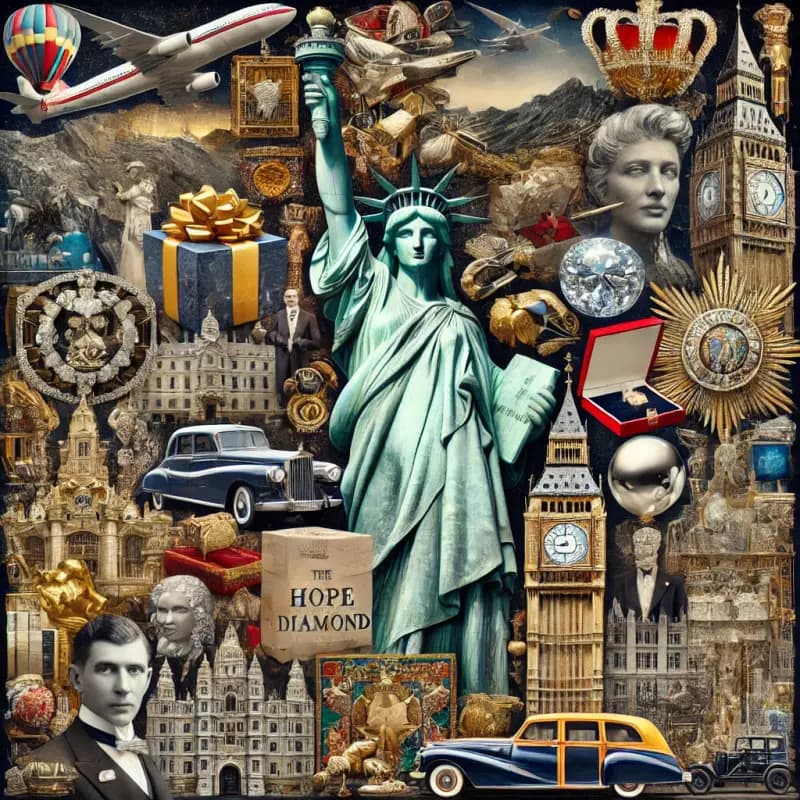
Introduction: The Timeless Art of Gift-Giving
Gift-giving is a practice as old as humanity itself. From simple tokens to grand gestures, gifts have served as powerful expressions of emotion, connection, and intention across every culture and era. Whether it’s a heartfelt momento or a diplomatic offering between nations, the act of giving and receiving gifts transcends boundaries, fostering connections and conveying unspoken messages. While most gifts might seem ordinary, some have carved a niche in history, leaving lasting impacts that resonate through time. They have altered perceptions, forged alliances, and even changed the course of history.
These symbolic presents often do more than just delight the recipient; they become interwoven into the fabric of historical narratives. In this exploration, we delve into some of these iconic gifts, tracing their journeys and examining the profound influence they wielded. From monuments of friendship to hidden diplomatic moves, these gifts remind us of the intricate stories and significance behind the art of giving.
Gifts as Symbols: Beyond Material Value
A gift is rarely just an object. In many instances, it serves as a potent symbol—of love, power, diplomacy, or goodwill. Throughout history, monarchs, leaders, and common folk alike have used gifts to communicate intentions, solidify alliances, and even manipulate outcomes in subtle ways. Behind every thoughtful gesture lies an underlying message that often goes beyond its material worth.
For example, a jewel could signify enduring loyalty, while an elaborate work of art might represent a cultural bridge. Iconic gifts have the capacity to shape relationships, sway diplomatic ties, and sometimes, instigate power struggles. They become emblematic, carrying stories that persist over generations. These stories serve as reminders of how a simple act of giving can transcend mere exchange, turning into narratives that capture pivotal moments in history.
The Statue of Liberty: A Gift of Friendship
One of the most recognizable symbols of freedom, the Statue of Liberty stands as an enduring gift from France to the United States. Conceived in the late 19th century, this iconic statue was a gesture of friendship between the two nations, celebrating their shared values of liberty and democracy. Designed by the sculptor Frédéric Auguste Bartholdi and built by Gustave Eiffel, the statue was dedicated on October 28, 1886.
Beyond its physical presence, the Statue of Liberty embodies enduring beliefs in freedom and the hope of a new life. For millions of immigrants arriving in America, the statue was the first image of their new homeland, offering a silent promise of opportunity and acceptance. This gift exemplifies how an artistic creation can transcend time, serving as a beacon and an emblem of shared human aspirations.
The Trojan Horse: Deceptive Diplomacy
In contrast to gifts of friendship, the story of the Trojan Horse is a sobering reminder of how gifts can be used as tools of deception. Originating from Greek mythology and immortalized in Homer's “Iliad,” the tale recounts how the Greeks cunningly ended the prolonged Trojan War. They presented the Trojans with a massive wooden horse, seemingly as a gift, while in reality, it concealed a band of elite soldiers within.
This “gift” was wheeled into the city of Troy and led to its downfall, highlighting the wariness that sometimes accompanies receiving presents. Over centuries, the Trojan Horse has become a metaphor for any stratagem that causes a party to inadvertently invite danger into their own space. It serves as a timeless reminder of the potential duality of gifts—their power to either unite or deceive.
The Koh-i-Noor Diamond: A Jewel of Contention
Few jewels in history are as storied as the Koh-i-Noor diamond, whose name means "Mountain of Light" in Persian. This gem has traversed empires, adorned the rulers of several kingdoms, and sparked contention over its ownership. Initially discovered in India's Golconda region, it was first recorded as part of the Mughal Peacock Throne.
The diamond exchanged hands multiple times due to war and diplomacy until it eventually came into the possession of the British Crown during the colonial era. Its journey through various royal families makes the Koh-i-Noor an emblem not just of beauty, but also of political power and imperialism. Even today, debates over its rightful ownership symbolize the complex histories of colonial legacies and how gifts can carry weight far beyond their immediate sparkle.
The Gift of the Rosetta Stone: Unlocking Ancient Languages
Sometimes, an unassuming gift can hold the key to entire worlds. Such is the case with the Rosetta Stone, discovered in 1799 by French soldiers during Napoleon’s campaign in Egypt. Though originally a decree issued in 196 BCE, its unplanned "gift" to the British after the defeat of French forces unlocked the door to the previously unattainable world of Egyptian hieroglyphics.
This large granodiorite stele contains the same text in Greek, Demotic script, and hieroglyphics, allowing linguists to finally decipher the ancient Egyptian language. The stone has since become a cornerstone in both linguistic and archaeological studies, representing how a chance discovery gifted to the world can revolutionize our understanding of history and culture.
King Manuel's Asian Animals: Diplomatic Menageries
In the 16th century, King Manuel I of Portugal harnessed the allure of the exotic by gifting a variety of exotic animals to European courts. These creatures—ranging from elephants to rhinoceroses—served as diplomatic presents, showcasing the reach and wealth of the Portuguese empire. Such gifts sparked wonder and fascination, captivating the imagination of European royalty and the public alike.
These menageries played a part in shaping Europe’s perception of far-off lands, fanning desires for exploration and conquest. The animals not only symbolized the riches and wonders of the newly encountered lands but also elevated the prestige and diplomatic status of the Portuguese court in the eyes of Europe.
The Taj Mahal: A Love Monument
The Taj Mahal is the ultimate testament to love, a mausoleum commissioned by Emperor Shah Jahan in memory of his beloved wife Mumtaz Mahal. Completed in 1643, it stands on the banks of the Yamuna River in India, mesmerizing visitors with its pristine white marble architecture and intricate workmanship.
Though a posthumous gift, the Taj Mahal transcends its original purpose, celebrated not only as an architectural marvel but as a symbol of enduring love. Its beauty and grandeur continue to draw millions of visitors each year, underscoring how a personal gift can achieve universal significance, encapsulating emotions that resonate beyond time and geography.
The Magna Carta: A Gift of Liberty and Law
The Magna Carta, often heralded as the great charter of liberties, was originally a gift of compromise between King John of England and a group of rebel barons in 1215. Although framed as a peace treaty, this iconic document laid down principles that have influenced legal systems worldwide, outlining basic rights and the idea of limits on governmental power.
While the Magna Carta did not initially change the dynamics of power significantly, over time it evolved into a symbol of constitutional law, serving as a foundational stone in the development of modern democratic systems. This historic gift transformed from a mere charter into a beacon of human rights and liberty, echoing the belief that even simple agreements can have far-reaching implications.
The Crown Jewels of England: Regal Symbolism
The Crown Jewels of England are more than just a collection of glittering gems; they are a potent emblem of regal authority and heritage. The tradition of gifting and regifting these jewels has been central to English royal ceremonies for centuries, serving as tangible symbols of continuity and power.
From coronation regalia to ceremonial pieces passed through generations of royalty, these jewels encapsulate the majesty and pageantry of the monarchy. Each jewel, steeped in history, not only represents the wealth and splendor of the British Crown but also the intricate ties that bind the present to the storied past.
The Leaning Horses of Saint Mark: Spoils of War
The Leaning Horses of Saint Mark are bronze masterpieces, each cornerstone of Venice’s artistic and war history. Originally housed in Constantinople, they were transported as spoils of the Fourth Crusade in 1204, symbolizing Venice’s triumph and might.
Throughout history, these horses were several times removed and returned, with Napoleon famously transporting them to Paris. They eventually found their permanent home atop Saint Mark's Basilica in Venice. Each move of these figures recounts a tale of conquest and restitution, illustrating the complex interplay of art, politics, and negotiation throughout history.
The Nikkō Tōshō-gū Gifts: Building Bridges Across Cultures
At Nikkō Tōshō-gū, a Shinto shrine in Japan, gifts to foreign dignitaries have fostered cultural and diplomatic ties. These offerings, often elaborate crafts or artworks, serve to honor international guests while celebrating Japanese artistry and hospitality.
Such exchanges have helped spread influence and mutual understanding between nations, especially during Japan’s interactions with Western powers in the Meiji era. By embracing the tradition of respectful exchange, these gifts remained instrumental in bridging cultural divides, showcasing how art and graciousness can be powerful tools in diplomacy.
The Gift of Ra: Pharaoh's Divine Offerings
In ancient Egypt, gifts were often imbued with divine symbolism, with pharaohs presenting offerings to gods like Ra not just as acts of devotion but as a political maneuver to uphold their divine status. Such gifts played a dual role—sacred ceremonies for deities and calculated moves to consolidate power and order.
These offerings, from richly detailed carvings to vast temple complexes, emphasized the pharaoh’s role as a mediator between gods and people. They not only reflect Egyptian religious beliefs but also offer insight into how rulers used divine gifts to navigate social and political landscapes, ensuring their rule endured through reverence and awe.
Cleopatra's Golden Aphrodisiac: Seduction in Antiquity
Cleopatra VII of Egypt was a master of seduction and diplomacy, known for her strategic gifts to Roman leaders—most famously, Mark Antony. Among these were lavish feasts and golden aphrodisiacs, wrapped in tales of romance and intrigue that still capture imaginations.
These gestures were not merely tokens of affection but calculated acts of power play, intended to secure Cleopatra’s influence and Egypt’s sovereignty amidst a turbulent era. Her gifts, steeped in legend, underscore how personal relationships and political ambitions intertwined in antiquity, reshaping historical narratives and shifting balances of power.
Conclusion: The Legacy of Iconic Gifts in Modern Times
As we reflect on these historical gifts, we are reminded of the deep interconnections between giving and receiving that continue to transcend time. Each iconic gift tells a unique story—of human emotion, ambition, and change—that resonates with us today. They demonstrate how gifts have played pivotal roles in shaping diplomatic relations, forging cultural bonds, and leaving an indelible mark on societies.
These legendary gestures illustrate that the true value of a gift often lies beyond its material presence, living on in narratives that continue to influence modern perspectives on generosity, diplomacy, and human connection. The stories behind each gift prompt us to consider the intentions and the impacts of our own acts of giving, recognizing that they too may hold the power to transcend time and legacy.